Why Tracking Your Dog's Daily Activity Can Save Their Life
Early detection through activity monitoring can catch health issues before they become emergencies
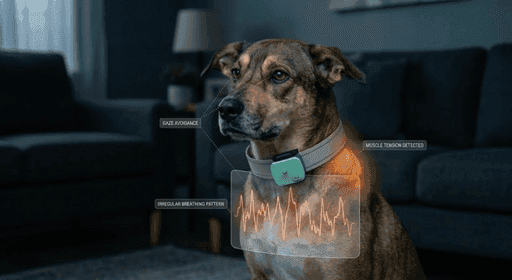
Why Tracking Your Dog's Daily Activity Can Save Their Life
Your dog can't tell you when something feels off. But their body can — if you know how to listen.
The Silent Warning Signs
Dogs are masters at hiding pain. It's an evolutionary instinct. By the time you notice something is wrong — limping, loss of appetite, lethargy — the underlying condition may have progressed significantly.
Activity tracking changes this equation. By establishing a baseline of your dog's normal activity patterns, any deviation becomes a signal worth investigating.
What Activity Data Reveals
- Gradual activity decline: A slow reduction in daily movement could indicate joint pain, arthritis, or early-stage illness
- Sleep disruptions: Changes in sleep patterns often precede visible symptoms of many conditions
- Posture changes: Subtle shifts in how your dog stands, sits, or lies down can reveal musculoskeletal issues
- Behavioral changes: Reduced playfulness or altered social behavior may signal emotional or physical distress
Real-World Impact
Consider this: a 10% decrease in daily activity sustained over two weeks might seem like nothing — maybe the weather changed, or your schedule got busy. But that same pattern, tracked objectively, could be the first sign of hypothyroidism, early arthritis, or internal discomfort.
With data, you catch these patterns. Without it, you wait until symptoms become obvious.
Making Data Actionable
The key isn't just collecting data — it's turning it into insights you can act on. That's why WellPet.ai doesn't just track; it analyzes, compares to your dog's baseline, and alerts you when something deserves attention.
Your dog depends on you. Give yourself the tools to catch problems early.
Want to understand your dog better?
Try WellPet.ai free for 30 days — includes a free smart collar.